Ch-Ch-Ch-Changes: How the Coronavirus is Affecting Colleges

row of books in shelf
Photo by Pixabay on Pexels.com

Naturally, I felt inclined to write about the infamous COVID-19 virus this week. In the past two or so weeks, all of my email inboxes have been papered with warnings and information about this unforeseen catastrophe, and how I, a student at a small, private university, can keep myself safe.

Living on the outskirts of Boston and attending college here, I have been able to see firsthand the potentially disastrous implications COVID-19 has plastered onto the city. The public transit is almost empty, the streets are alarmingly quiet, and the general atmosphere of my environment is a mixture of edginess and excitement. As potentially scary as a pandemic is, it is a fascinating time to be alive, wondering what will happen next as you scroll through your email and eye the alerts.

As of writing this, my school has not announced or hinted at a decision to close its doors and move online. If I had to pick a plausible outcome, I would say my university will probably extend spring break by a week or so, but probably not more than that.

(3/16 Update: Our spring break is extended by an additional week and all of our classes are now online. Students are still allowed to stay in the resident halls if they wish.) 

The risk is still relatively low for my area, and no one on my campus has tested positive for the virus. Here are all the ways the school closing down would affect students such as myself:

-Although this does not apply to me particularly, international students would be effectively screwed if my university decided to shut its doors. I know of several international students who have no other options at this point in time, especially on such short notice. 

-Students who rely on public transit, such as myself, would have a difficult time getting to our internships in Boston if we were asked to leave campus and resume classes online. Because I do marketing and social media work, I would probably be able to manage my internship online, but not everyone has that opportunity. 

-My university is well-known for its applied arts and fashion program, which basically exclusively requires students to stay on campus to utilize the materials and sewing machines. How can fashion students resume their work and build their collections online?

-Would I be refunded for room and board? Meal plans? Senior week payments?

These are just a few of the thoughts going through my head right now. As you can probably infer from the title of this article, however, I’m trying not to worry too much about these potential changes. I’m looking forward to posting an update on this situation down the line, as I believe my college is going to make a final announcement about the new course of action over the next couple of days. As I said, I believe the most extreme choice my college would choose to make would be to extend spring break by another week or two, due to the disruptive nature and implications of basically canceling the semester.

Of course, if the pandemic did reach a point where staying on campus would be an overwhelming safety concern, of course, I would be receptive to taking online courses for the rest of the semester. It would be inconvenient, of course, and a pretty meager ending to my senior year of college, but there isn’t really much I can do to control the situation. 

For the time being, remember to wash your hands, use hand sanitizer, avoid large crowds, and cover your mouth when you cough! How is the coronavirus outbreak affecting your lifestyle? Let us know in the comments below.

Brain on Fire: Detaching from Trauma and Complex Post-Traumatic Stress Disorder

Image result for scribbles

Over the last couple of years, I feel like I’ve gone through an enormous internal metamorphosis. Most days, I wake up brimming with positivity and gratitude, and sometimes even a sense of self-actualization. I truly do feel like I am the best version of myself that I can be, and even when I make mistakes, I try to be gentle and forgiving with myself.

I wasn’t always that way. Middle school and high school, the most formative years of my life, were turbulent and full of dark energy and negativity. I constantly found myself plagued with anger, confusion, self-doubt, self-deprecation, the sense that I was a bad/broken person, and a tendency to exhibit fawning behaviors (common with survivors of verbal and emotional abuse). I was extremely anxious and highly sensitive to loud noises, confrontation, and raised voices. If someone even criticized me a little bit, and particularly if they spoke loudly, my ears would begin to hum and vibrate. I shared several of my childhood memories with a therapist in high school, including the time I was dragged across the carpet and spanked as a child, screaming, and how similar memories tended to pop into my mind like uncomfortable flashbacks. I told her about my notable (but not alarming) social delays, my broken confidence, my damaged relationships, and my extreme discomfort with certain areas of my body. She swiftly summarized my case as C-PTSD, otherwise known as Complex Post-Traumatic Stress Disorder. C-PTSD is commonly diagnosed in individuals who grew up experiencing repetitive, prolonged abuse, usually as a child. One of the most common experiences for young adults with C-PTSD is growing up with a parent who exhibits narcissistic tendencies, which is what my family agrees probably happened to me from my father. As a result of disconnecting from him, I went through a very mournful period of traumatic grief. 

What may be normal and surmountable to some children could be extremely difficult for others. Many kids grew up with unhappy childhoods and ended up fine, but for me, growing up afraid in my own household and dealing with anxiety through the roof, panic, and fight-or-flight sensations permanently altered my brain chemistry. As the therapist described it, my brain was “on fire,” constantly lit up with a life-or-death panic and ravenous will to survive.

There are still foggy patches in my brain, and sometimes, I lay awake and think, What happened to me? Most of the time, however, I put those worries to rest and allow the unknown to be unknown. At 20 years old, I still have several unrecovered memories that I choose to leave unearthed.

After I was put on a standard dose of escitalopram (which I continue to take to this day), entered college, and became estranged from my biological father, something surprising happened to me: I have seemingly recovered from my initial C-PTSD diagnosis.

This raises two questions. 1) Is it possible to recover completely from C-PTSD? Also, 2), did I ever actually have it? Do I simply have a ‘mild’ case of it? Am I just exceptionally lucky?

Honestly, I have no idea, and I almost don’t care to know. I do know that my trauma still impacts my life in several ways, but it’s not unmanageable and detrimental like it was a few years ago. It’s almost as if I’ve learned to love that part of myself and nurture it back into a state of healing. Additionally, as I emerge into adulthood, I feel like I have become very comfortable with self-regulating my emotions, particularly since I have such a strong support network now. 

I am a highly sensitive person. I still catch myself exhibiting fawning behaviors from time to time; particularly recently when I was going through a difficult period of anger and conflict with a close friend of mine. Rather than being angry, however, I am learning to self-soothe and forgive myself for the things I cannot control. I can truly say that I love myself and I’m enormously proud of the progress I have made.

When I feel my weakest, I remind myself that I am actually made of strength and perseverance. 

When my heart begins to cloud with fear, as it was a couple of weeks ago with my friend, I had a sudden moment of clarity and peace that enabled me to write this article in the first place: I am not a broken woman, I am not a bad person, and I am NOT going to push myself into a state of grief over privations when I can use this situation instead to love, forgive, and grow.

As I said, I wake up every day full of gratitude and fullness for the beauty of my life. I wish it were easier to put this feeling into words, but truly, I feel such a sense of clarity and excitement about the beauty and complexity of the world. Having gone through difficult things, kindness and compassion are even more present in my life than they ever were before, and I think that juxtaposition is a beautiful thing. Please don’t ever destroy yourself over things that are out of your control; forgive yourself for the cracks in your soul and learn to nurture those patches, too.

Reviewing Trends in 2020

I’ve never been much of a trendsetter myself, but I do love social commentary and analyzing the culture around me. Especially since I’ve been engaging in several of these trends myself, I wanted to summarize my thoughts on them (and maybe even predict which ones I think will die out by summertime). Let’s get into it!


Snakeskin Nails

IMG_9666.jpg
Photo: ImogenFoxyLocks on Instagram

I feel like every season, a new nail art technique or pattern papers my entire Instagram feed. Right now, snakeskin nails are taking center stage, particularly in neutral or brown-toned shades. I do appreciate the creativity of this nail pattern, there are drawbacks. 1) I could never see myself doing this, and 2) I feel like this trend will die out by spring. The warmer months are usually all about pastels and bright-toned colors, these brown-toned nails are much better suited for fall and winter. 


Clean Skincare

Image result for glossier
Photo: Business Insider

This is one of my favorite trends of the past six months, and that’s because I’ve jumped on the bandwagon myself. It’s a common trend among Millennials (and younger generations) to choose cruelty-free, vegan products over more traditional, “mature” brands, such as MAC and Clinique. Personally, I’m so proud to be a part of this clean, health-conscious, cruelty-free wave. In 2020, you’ll notice everyone – influencers, friends, and everyone in between – sporting their favorite clean makeup brands. Some of the most popular brands at the moment include Juice Beauty, Glossier, and one of my personal favorites, Burt’s Bees. 


CBD Everything

Image result for cbd
Photo: Leafly.com

If you’ve noticed a sudden surge in CBD products amongst young people, you’re not alone. Obviously, CBD and THC have been around forever, but there has been an undeniable shift in popularity since US laws have begun to see these products in a more lax, forgiving light. Some of the most popular CBD products you’ll see on the market are tinctures, oils, lotions, and even tasty snacks, and they’re usually marketed to offer relaxation and tranquility. I’m personally a huge fan of CBD products, and several of my close friends are as well. Of course, always remember to make sure CBD is a safe, healthy alternative for you before diving into it!


E-Girl Blush

Image result for e girl blush
Photo: Dazed.com

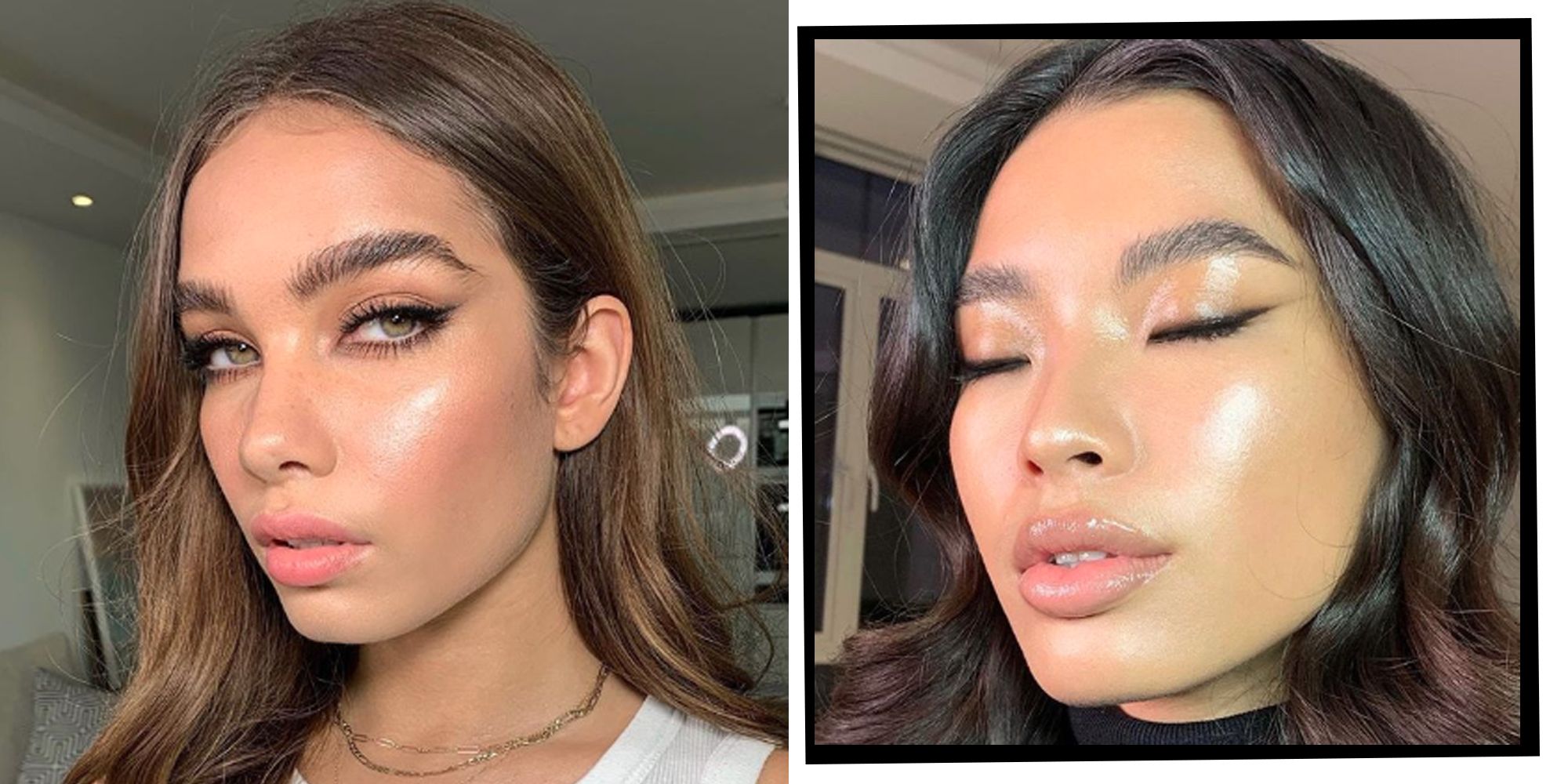
Personally, I am absolutely OBSESSED with the new E-Girl trends sweeping the world. I was first inspired by hip hop artist Doja Cat, and then, once my queen Jenna Marbles started wearing tons of pink blush, I decided to try it as well. Packing on tons of blush has quickly become a staple in Japanese fashion and E-Girl culture. I love the youthful flush it gives the face. Honestly, I hope this trend doesn’t fade out any time soon, because I think it’s adorable and it looks stunning on all different skin tones.


Warm Reds

Image result for red hair trend
Photo: Good Housekeeping

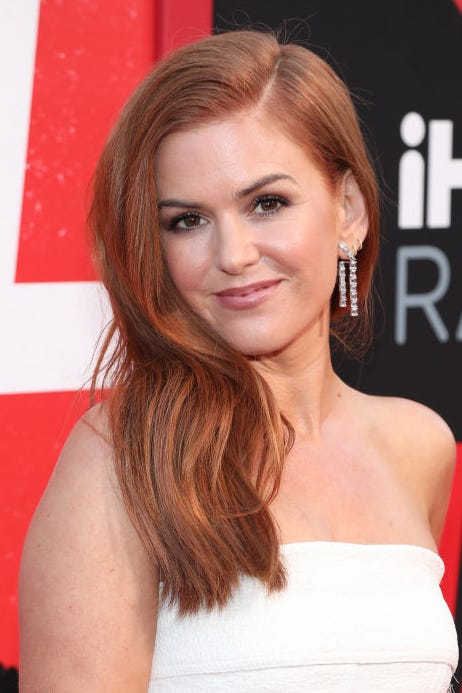
Similarly to the rosy blush theme, warm-toned reds overall are very in right now (particularly for hair color). Warm-toned hair ranges from strawberry blonde to her dark, moodier sister, red velvet, and it’s been sweeping the red carpet thus far. I love warm-toned anything, and I think this trend in particular is absolutely gorgeous. Particularly on darker skin tones, reds and maroons are an absolutely gorgeous pairing. Warm hair combined with a warm blush? It’s a match made in heaven, folks. 


Blue Makeup

Image result for stickybab.y
Photo: stickybab.y on Instagram

On the opposite end of the spectrum, blue makeup has been popping up quite a bit on my social media as well. Blue can be a tricky color to wear, especially for folks who already have blue eyes. One of my personal favorite makeup icons at the moment is Havana (@stickybab.y), who draws her blue inspiration from the animated film Coraline. I personally think this trend is so fresh, so electric, and so perfect for spring. Needless to say, you may see me sporting some blue eyeliner in 2020. 


Tons of highlight

Image result for face highlight
Photo: Elle.com

Lastly (but certainly not least), packing on tons of highlight has been a huge makeup trend in 2019 and 2020. In general, I feel like shimmery, glittery makeup is really on-point right now. If you watch Vogue’s YouTube channel, you probably remember Grimes doing her makeup and literally packing loose glitter into her hairline (imagine trying to get that out in the shower!). Anyway, I think that the glowing highlighter trend is definitely here to stay, especially since so many brands are incorporating highlighter palettes into their 2020 collections. It’s a stunning pop of color, and it adds so much dimension to the face.

Source: https://www.whowhatwear.com/beauty-trends-2020/slide25

All About My Piercings

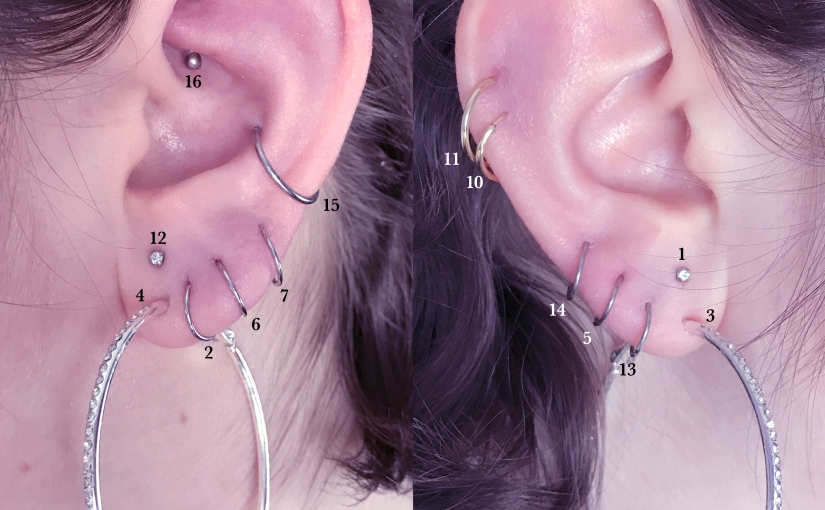
I don’t know what exactly classifies a person as “heavily pierced”, but I can definitely say I have more metal in my body than the average person. I got my first piercing when I was 5 years old- generic first lobe holes with little pink gems on golden studs. I was obsessed with them and wore every kind of earrings under the sun. That was just the start. At 22, I currently wear 16 piercings every day, which I’ve gotten over the span of 18 years of my life. Come on my journey with me of putting what some may think is way too many excess holes in my body.

Disclaimer #1: as of the publishing of this article, I have 16 active piercings (ones I actually wear jewelry in, other have closed up or are not in use). I’m not going to talk about the ones I no longer wear because this article would be wayyyyy too long. 

Disclaimer #2: I have very sensitive skin, so in my body, the only metals I will wear are titanium, stainless steel or pure gold. My preference in piercing style is a hollow sterile needle. My preferences are just that- my own and please do what works best for your body!

Disclaimer #3: I am not a licensed piercer by any means. Everything stated is my unprofessional opinion, in addition to my feelings / the way my own body handled the body modification. Talk to a licensed professional if you want professional advice. Essentially, this is just for fun and take everything here with a grain of salt. Thank you!

In order of when I got them:

  1. Right Upper Lobe

This piercing was originally my “first regular lobe piercing”. Upon looking at the unevenness of my two first holes, I got them re-pierced at 11, but I continued to wear this “upper” lobe piercing since then

  • When: 2002/2003 
  • Where: Frank and Fran’s
  • With what: Piercing gun : – (
  • Pain of piercing: 6
  • Pain of healing: don’t remember
  • Ease of healing: 7 (the back of my earring got lodged in the hole; did not know proper aftercare like I do now)
  • Jewelry I got it pierced with: Gold piercing studs (pink jewels)
  • Jewelry I’m wearing in it now: Small titanium stud with cz jewels
  • Ranking out of my piercings: 4/16 (unique piercing, I’ve never seen it on someone else)
  1. Left Lobe 2

This piercing was originally my “first regular lobe piercing”, just like the one above, but I just used this as a second lobe piercing later in life

  • When: 2002/2003 
  • Where: Frank and Fran’s
  • With what: Piercing gun : – (
  • Pain of piercing: 6
  • Pain of healing: don’t remember
  • Ease of healing: 5
  • Jewelry I got it pierced with: Gold piercing studs (pink jewels)
  • Jewelry I’m wearing in it now: Titanium endless hoop
  • Ranking out of my piercings: 10/16
  1. Right Lobe 1

This piercing was my new “first hole”, pierced when I was 11

  • When: 2008 
  • Where: Frank and Fran’s
  • With what: Piercing gun : – (
  • Pain of piercing: 4
  • Pain of healing: don’t remember
  • Ease of healing: 1
  • Jewelry I got it pierced with: Gold piercing studs (clear jewels)
  • Jewelry I’m wearing in it now: Changes on the daily, these are the only piercings I take out every night/change on a consistent basis/wear heavy or fake jewelry in
  • Ranking out of my piercings: 1/16 (most used/flexible)
  1. Left Lobe 1

The same as above

  • Ranking out of my piercings: 2/16 (most used/flexible, but a bit more sensitive than the right ear)
  1. Right Lobe 3

At the time I was 13 and not wearing the first two of these piercings, and I just wanted one second hole because I thought being asymmetrical would be cool. (At the time this was my “second” hole on my right ear)

  • When: 2011
  • Where: Frank and Fran’s
  • With what: Piercing gun : – (
  • Pain of piercing: 2
  • Pain of healing: don’t remember
  • Ease of healing: 2
  • Jewelry I got it pierced with: Gold piercing studs (clear jewels)
  • Jewelry I’m wearing in it now: Titanium endless hoop
  • Ranking out of my piercings: 11/16
  1. Left Lobe 3

Wanted 4 holes in my left ear. Mom said yes. Got ‘em for my 17th birthday present

  • When: October 2015
  • Where: Frank and Fran’s
  • With what: Piercing gun : – (
  • Pain of piercing: 4
  • Pain of healing: 3
  • Ease of healing: 5 (one of them did not wanna be pierced. Had to go back and repierce it years later)
  • Jewelry I got it pierced with: Silver ball studs (WOULD not recommend silver for piercings)
  • Jewelry I’m wearing in it now: Titanium endless hoop
  • Ranking out of my piercings: 9/16
  1. Left Lobe 4

The same as above

  • Ranking out of my piercings: 8/16
  1. Left nostril piercing

I had wanted this piercing for so long. I wore fake ones so often that people didn’t realize when I actually got it pierced that it wasn’t already real. My parents “allowed me to get it done” for Christmas when I was 18

  • When: January 2016
  • Where: Village Streetwear
  • With what: Hollow needle
  • Pain of piercing: 2?
  • Pain of healing: 3
  • Ease of healing: 7 (got multiple keloids, super annoying to heal)
  • Jewelry I got it pierced with: L shaped stud (purple iridescent!)
  • Jewelry I’m wearing in it now: Titanium endless hoop
  • Ranking out of my piercings: 3/16
  1. Septum

I was supposed to get this done in like September of 2016 with my best friend, but I chickened out and got my closed lobes repierced. My partner at the time wanted to get theirs and I was like “fuck it” and got it with them. However, they forgot their ID when we went to get it done, so the professional place turned us away, and we went to this side place because they wanted to

  • When: February 2017
  • Where: Some corner store on St. Mark’s street in NYC
  • With what: Hollow needle
  • Pain of piercing: 1
  • Pain of healing: 3
  • Ease of healing: 4 (got infected like a year after piercing after a cold, generally not annoying to heal)
  • Jewelry I got it pierced with: Regular shmegular titanium horseshoe
  • Jewelry I’m wearing in it now: same titanium horseshoe (I’ve worn endless titanium hoops which are cute but not able to flip up into my nose when necessary)
  • Ranking out of my piercings: 6/16
  1. Upper Cartilage 1 (lower)

My friend texted me on a Saturday morning and was like “wanna get free piercings?” and of course I was like yes. That was super dumb. I got them done by an apprentice (that’s why they were free), like 2 days before my 21st birthday

  • When: April 2018
  • Where: Not gonna say
  • With what: Hollow needle
  • Pain of piercing: 5
  • Pain of healing: 10
  • Ease of healing: 10 (stayed infected/incredibly painful for a year and a half after I got it pierced. Both of them are pierced diagonally through my ear, so no earring I had was long enough to not squeeze the skin. After a year and a half of huge keloids and pain, I switched the jewelry to something that finally worked and I haven’t had a problem since.) No shade on the apprentice who did them at all, they were new and I’ve learned after this that my ears realllllly hate cartilage piercings and are super temperamental to heal
  • Jewelry I got it pierced with: Flat back studs (reason these were awful was because the ball on the front was way too small and my ear almost swallowed them whole)
  • Jewelry I’m wearing in it now: Seamless pure gold hoop, and I will never wear anything else in it, because it’s the only thing that has never irritated it
  • Ranking out of my piercings: 12/16
  1. Upper Cartilage 2 (upper)

Same as above, but holy fuck this is the worst, most painful and troublesome piercing I have. I’m surprised I actually still have it in

  • Ranking out of my piercings: 16/16
  1. Left Upper Lobe

This is the easiest piercing I’ve ever had. I got it pierced on a whim; went with a friend to go to my favorite piercing place and just thought why not? I got it to even out my ears; I already had the upper lobe on my right

  • When: December 2018
  • Where: Village Streetwear
  • With what: Hollow needle
  • Pain of piercing: 0
  • Pain of healing: 1 (I genuinely forgot I got it pierced it was so easy).
  • Ease of healing: 1
  • Jewelry I got it pierced with: Titanium ball stud
  • Jewelry I’m wearing in it now: Small titanium stud with cz jewels
  • Ranking out of my piercings: 5/16
  1. Right Lobe 2

*sigh* so…. I was bored and depressed in my apartment one summer day and thought “I wanna fully even out my lobes. So I just pierced the extra 2 lobe piercings myself. Dumb, 1000% would recommend not doing that, but… here we are

  • When: July 2019
  • Where: …myself
  • With what: Sanitized sewing needle
  • Pain of piercing: 1
  • Pain of healing: 3
  • Ease of healing: 3 (Got a little red but nothing too bad)
  • Jewelry I got it pierced with: Gold piercing stud with clear jewel
  • Jewelry I’m wearing in it now: Titanium endless hoop
  • Ranking out of my piercings: 13/16
  1. Right Lobe 4

Literally do not do this. I lived right next to St. Marks street, the piercing capital of NYC; I had no excuse

  • Jewelry I got it pierced with: Small titanium ball stud
  • Jewelry I’m wearing in it now: Titanium endless hoop
  • Ranking out of my piercings: 14/16
  1. Conch

It was Friday the 13th and a piercing/tattoo shop had a deal for $13 piercings and I was like “hell yes” and the rest is history

  • When: October 2019
  • Where: Murda Ink 3
  • With what: Hollow piercing needle
  • Pain of piercing: 5
  • Pain of healing: 5
  • Ease of healing: 5 (Still have a little keloid on it, but I’m slowly healing it)
  • Jewelry I got it pierced with: Steel conch ring
  • Jewelry I’m wearing in it now: Steel conch ring (I literally am never touching this thing)
  • Ranking out of my piercings: 7/16
  1. Rook

Same story as above

  • When: October 2019
  • Where: Murda Ink 3
  • With what: Hollow piercing needle
  • Pain of piercing: 6 (I’m gonna be honest this was the most painful of my piercings, I think mostly because my conch was already in pain and it’s a tricky spot to get to)
  • Pain of healing: 5
  • Ease of healing: 5 (Still have a little keloid on it, but I’m slowly healing it)
  • Jewelry I got it pierced with: Steel curved barbell
  • Jewelry I’m wearing in it now: Steel curved barbell (I literally am never touching this thing)
  • Ranking out of my piercings: 15/16

Overall, I love my piercings. I’ve been pretty intentional with my placements and although some of them give me trouble, I wouldn’t take any of them out. I’m fortunate to live somewhere and work in an industry that doesn’t care about piercings. I personally prefer to hide my piercings and tattoos when I’m in a professional setting; I wear headphones all day so you can see none of my ear piercings, and I tuck up my septum. However I think they enhance my looks/aesthetic and I really love being a generally decked out person. 

I might put out a tattoo tour soon, so stay tuned! If you have any questions on piercings or body mods in general, feel free to DM me on Instagram: @mjsullivanart. Thanks for reading!

I was Trapped…

Trigger Warning! This passage has mentions of Sectioning, Suicidal Ideations, and Self Harm. Please read only if you feel it is safe to do so.

I was always under the impression that you can trust health care professionals. They’re there for your best interests; to keep you safe and healthy. They would never force you into anything for their own gain or to save their own backs, right? That’s what I always thought, and I can safely assume that for a majority of doctors out there. However, there is always an exception to the rules.

I was going to see a free counselor weekly. That was my only treatment plan and, for a while, it was working. But sometimes talking is not enough and my counselor suggested I go to my PCP to ask for medication. I agreed and made an appointment with a doctor right down the street. I had been on SSRIs before, so I figured the prescription would be easy to renew.

Despite this, I walked to the appointment terrified. My mental illness was always one of my biggest secrets; I could count on one hand the people who knew. As I walked down the street, everything that could possibly go wrong spun in my head. One thought repeated itself more than the others. What if he doesn’t believe me?  That was the fear that was holding me back for years. I was always convinced that, if I were to express how I was actually feeling to others, they would either not believe me, thinking I was trying to be trendy, or, on the complete other side of the coin, they would believe me too much.There was such a stigma about mental illness, there was no way to know how people would react. 

I had finally arrived at the office and sat in the waiting room. At this point, I was shaking. As I was trying to think of any excuse to get up and go home, I heard my name called. I slowly stood up, briefly debated making a run for it, but ultimately changed my mind and followed the nurse into the examination room.

After she finished the routine blood pressure and weight checks, the nurse left the room and I was alone with my thoughts. There’s no going back now. I tried to shake the fear out of me. He’s a doctor, he won’t judge you. Eventually, there was a knock at the door and Dr. Johnson walked in. 

He asked me why I was there and I explained that I had been diagnosed with Major Depressive Disorder at age sixteen but had not been medicinally treated since I was eighteen, just over two years ago. I told him my previous prescription and that I wanted to start it up again. Then Dr. Johnson started asking the hard questions. 

“Have you ever cut yourself?”

“Yes. Routinely between the ages of nine and nineteen.”

“Have you ever had suicidal thoughts?”

“Yes. I’ve actually attempted it.”

“How?” 

“I… hung myself from a ceiling fan”

“When?”

“Two years ago.”

I then explained that I was in a very bad place back then, with absolutely no treatment plan and no one I felt I could reach out to. I insisted that I did not feel that way anymore. I explained how much my counselor has helped and how I have been opening up to my sister and boyfriend a lot more. I was actively asking for help.  I was no longer actively suicidal. 

I watched as he wrote everything on his chart. I was clearly scared, each one of my answers getting quieter and quieter. He then asked me if I currently had a “plan”. I told him that I did not, repeating again that I was not actively suicidal. He asked two more times and then said, “If you did have a plan, what would you use?” 

This seemed like a really weird question, but I figured it was routine so I played along.  I thought about it for a minute. I had not considered this at all, so I had to think of everything at my disposal. “A belt? I guess?” He wrote the answer in his chart.

“Ok. I am going to suggest that you stay overnight at the hospital.” I immediately started crying and objecting. Dr. Johnson explained it would only be for one night. This was the first lie. I refused again and so he came up with a middle ground. “If I bring a psychologist and they agree you should get further examined, would you agree?” I thought for a second. A psychologist must hear things like this every day, she’ll understand. Hesitantly, I agreed and Dr. Johnson walked out, saying he would be back with the psychologist. At least he believed me.

He returned a minute later not with a psychologist, but a transport team. I started crying even harder, scared and confused. The transport team tried to put me into a wheelchair, but I declined, saying I would be compliant and walk. A montage of movie clips flashed in my head of people refusing, just to have the doctor subdate them, eventually waking up strapped in a bed.As I was walking out, I asked Dr. Johnson if I was being admitted into the hospital. He assured me, no, I was not being admitted, I was just being brought to the Psychologist’s office.

The transport team took me across the hospital to the E.R. Admissions Desk.

The transport team gave the desk all of my information, while I stood silently behind them, tears running down my face. After a few minutes, the woman behind the desk printed out a bracelet and wrapped it around my wrist. I was officially a patient of the hospital. 

I was terrified and confused. I had never been admitted into a hospital before. I had no idea about the routine or procedure of the hospital, I had officially lost all control of what happened to me next. It seemed so much bigger than going to the doctors office. This was no longer a routine appointment, now there was something wrong with me.

I sat in the E.R for five hours before the psychologist came. The nurse brought me some coloring pages (I was in the pediatric wing), and I distracted myself as best as I could, having absolutely no control over what was happening to me.

Finally, the psychologist came in. She asked me about my medical past, reading my chart as we talked. I repeated the entire conversation I had with Dr. Johnson. Then, looking up from the chart for the first time, she asked, “What about the belt?” I explained that Dr. Johnson had made me come up with a plan, that I had not thought about anything until he asked me.

 The psychologist didn’t believe me.

She told me I was going to be in the hospital for at least the next 72 hours. When I said Dr. Johnson said it would only be overnight, she said that they don’t do that. The earliest I could be released was three days from now.  She then handed me a contract, saying that, unless I was seen as a danger to myself or others, the hospital legally had to release me after the three days. All of this seemed so sudden; I could barely get a grip on what was happening before a new piece of information was thrown my way. This was all new territory for me. I was barely an adult! I was not ready for these life changing decisions! My family was on the other side of the country, so I couldn’t even turn to them for support. I signed it, not knowing what else to do. 

After she left, another transport team came in and escorted me to the psych ward. I grabbed my bag, which my roommate quickly threw together when I called and explained what was happening, and walked to a conference room. A nurse walked in after us, sat me down, and explained the legal side of what was happening. He then said he had to confiscate my phone, which I was not expecting. I started crying yet again and explained that I need my phone, not to talk to people or go online, but to listen to something while I slept. I have awful night terrors and the only way to calm them is to distract myself with dialog. He looked me dead in the eyes and laughed,  “I mean I can stand over your bed and talk to you all night.” I didn’t think it was funny. 

I finally gave up my phone, still wanting to be compliant. On top of my phone, the nurse confiscated all my sweatshirts and my shoes; anything with a removable string. They brought me to my room and I laid down, terrified and still not entirely sure what was happening, and cried myself to sleep. 

The next day I was woken up at 6:00 am to get blood drawn. Afterward, I went to breakfast, where I met everyone else in the ward: A girl about my age who was completely monotone, a recovering alcoholic who had relapsed, a girl who was assaulted and started thinking of hurting her attacker, a man who had been paralyzed from a car wreck and started losing the will to live, and an old lady who was convinced she was dating a country star she had never met, who talks to her through pictures on Facebook. We were quite the Brady Bunch. Everyone seemed surprisingly normal, no one was in a straight jacket or rocking in the corner. They could tell I was not happy being there and started to comfort me, saying they all took care of each other. My eyes started to dry for the first time in 24 hours. 

I then met my team. It consisted of a doctor and a caseworker. We sat in the conference room and they explained their roles. The doctor was there to diagnose me and prescribe me medication, while the caseworker was there to find me an outpatient psychologist and psychiatrist. They then asked me to go over my symptoms yet again and I went over the same story I had repeated one thousand times in the past day. I then said something that piqued my doctor’s interest. I explained that I have thoughts that I can not control, as if someone else is in my head. I now understand that it is just my brain trying to conceptualize my illnesses, but I did not have the language to explain that back then. I had never told anyone about the “voices” back then, and stated, “I don’t want you guys to think I’m crazy.” The caseworker smiled and said, “We don’t think you’re crazy, do we, Dr. Miller?” This made me feel a little better, until Dr. Miller answered, “Well what you’re describing is psychosis, so in that case, you may very well be crazy.” I was shocked, unable to say anything. Was I actually crazy?

I explained my symptoms further and Dr. Miller decided I was, in fact, not experiencing psychosis. She decided my diagnoses,making it four in total now, and wrote me a prescription. She then explained that, because I was a student, she was going to write a note saying I could have my computer for an hour a day. My caseworker then explained that, while she worked to find me outpatient care, I had to find someone I could stay with after I was released. I agreed and we went our separate ways.

I immediately ran to the phone and called my aunt, she was the closest living relative and I knew I could turn to her. I explained the situation and she was rightfully shocked. She was not even aware of my MDD diagnosis, let alone my history with self-harm. She agreed to let me stay with her and came that afternoon with new shoes and games to entertain myself. 

The next few days actually were not that bad. I was starting to bond with the other patients and spent most of my time in the OT room doing arts and crafts. Art had always been a coping skill for me; a way to completely forget about the world around me and focus on my breathing. Despite being physically trapped in a single hallway, my mind was free. One problem, however, was the orderlies still refused to give me my computer. I could deal with that, though, until the third day, when my caseworker came up to me and said she needed to talk.

Nothing could ruin my mood that day. It had officially been 72 hours, I was finally going home. I was free. I smiled up at her and asked what she wanted to talk about.  She looked at me solemnly and said “I don’t know if you’re going home today. We still have some work to do.” My heart dropped. I stared at her in shock and followed her to the conference room. I sat down at the table, where Dr. Miller was already waiting for us. The caseworker then went on to explain that, even though they both agreed I was indeed not a harm to myself or others, I had to stay a little longer because my caseworker had not been able to find outpatient care for me. Apparently, the three days I was there, she had only made two calls, one to a psychologist and one to a psychiatrist, and they had not answered. I was bawling my eyes out at that point, barely able to breathe. We all agreed to drop the conversation until my aunt arrived.

An hour later, my aunt showed up and we all went back into the conference room. I asked the doctor how I could possibly be held here if they knew I was not a harm to myself. It did not seem legal. Dr. Miller then explained that if I did not agree to retract my contract, she would take me to court. I sat in shocked silence. This could not be happening; how was I continuing to be punished for someone else’s mistakes? She then continued to threaten me saying I could not leave until the court case was over, and it would take up to eighteen days just for the paperwork to be filed. This was the last thing I wanted to happen. I talked it over with my aunt for a minute and we decided it would be best for me to retract the contract. I signed the new paperwork and then turned to my caseworker. I asked her how she planned to ensure that I will be released as soon as possible. She looked me in the eye and said she would not make any more calls. She would wait until the two people called her back, and she could not guarantee that happening. She said I was free to do my own research and find my own doctors. My aunt stepped in at this point and asked how I was supposed to do that, I did not have access to my computer. Dr. Miller then admitted at that point that she never actually wrote the permission note to give me access to my laptop. My aunt insisted that she write and submit it right then and there. 

After the meeting, my aunt and I came up with a plan. She called my sister, who we were both in contact with the entire time, and we all agreed to share an excel sheet of every available psychiatrist and psychologist in the area. We split the sheet into thirds and spent the next day making calls. After each of us calling around twenty offices, I finally got two appointments for a week from then. Now, I just had to wait for the doctors to call the hospital and confirm our meetings. 

It took three more days, but finally, my caseworker called me into the conference room. “You’ve clearly done a lot of work in the past few days. A psychiatrist and psychologist have confirmed your appointments. We already called your aunt, she’s coming to pick you up at lunchtime.” 

Finally, I was leaving. For the first time in a long time, I felt like I had control of my life. Looking back now, a little over a year later, I can see the way this traumatizing experience has helped me. It put me on the right track, and started a comprehensive treatment plan to help me get through every day.  Most importantly, it forced me to ask for help from people I never thought I would. A strong support team formed from that experience, and I know now I can reach out to my aunt, my boyfriend, or my sister and they will drop everything to help me. Because of the supports created there, my mental health has made a complete 180 and I am genuinely happy for the first time in a decade. It taught me a lesson that I desperately needed to learn: even in the darkest tunnels, there is always a light at the end.

Tips for Having a Low-Waste Wedding

Even though I am very single and nowhere near close to planning my future wedding, it’s still something I enjoy daydreaming about and reflecting upon. Especially since I became more interested in the low-waste movement and the vegetarian community, I’ve wanted to compile a list of ideas I’ve crafted for my own personal ceremony and reception. I hope you find this article helpful, and possibly even gather a bit of inspiration for your own wedding!

By the way, I like to use the phrase “low waste” instead of “zero waste” because I think it’s impossible to be completely, 100% zero waste in all aspects of your life. “Low waste” is a much more appropriate term to me, because it acknowledges that slow-living and low-waste lifestyles are never going to be completely perfect. Nonetheless, any effort towards sustaining the environment, small or large, is a feat that should be celebrated.  


BUY A SECONDHAND DRESS

wedding preparation
Photo by Terje Sollie on Pexels.com

This is actually something I wanted to do before I even got interested in low-waste because I think vintage wedding dresses are absolutely gorgeous. Considering that fashion is one of the most wasteful (and environmentally harmful) industries in the world, it was a no-brainer for me to decide I want to buy my wedding dress second hand. Not only is that more cost-effective, it also means less waste is being thrown into the environment. One of my favorite places to browse vintage wedding dresses is Etsy, but there are also physical vintage shops where you can find wedding dresses as well. In fact, I live fairly close to a warehouse full of vintage clothes, and I know from personal experience that there are TONS of gorgeous 1950s-1960s wedding dresses there. 

Image result for samantha van wie wedding


USE DIGITAL/RECYCLED PAPER INVITATIONS

women s brown and green floral dress
Photo by Dmitry Zvolskiy on Pexels.com

Sending out invitations is one of the most crucial parts of putting together your wedding, but it doesn’t have to be wasteful. One way to go paper-free is to simply send your invitations digitally, using either a graphic designer or designing them yourself using a program (such as Canva, which is free!). Alternatively, if you’re not a graphic designer and you don’t feel comfortable sending out a digital invitation, consider the possibility of sending your invitations on recycled paper. Not only does doing so benefit the environment and reduce waste, it is also very cost-effective for your wallet to opt for recycled paper instead!


ASK YOUR FLORIST ABOUT ZERO-WASTE OPTIONS

pink rose flower bouquet
Photo by Secret Garden on Pexels.com

You don’t need to spend an exorbitant amount of money to have a beautiful flower arrangement for your wedding. Depending on your personal resources, you may want to consider making your own arrangements instead of going to a florist. Or, if you’d rather go to a professional for your flowers, ask if there is any way you can approach the task in a more low-waste way. For example, since many professional arrangements come with foam in them, perhaps you can ask your florist to skip the foam and plastic to cut back on waste. It would also be ideal to order flowers from a local shop, as this will boost your local economy and result in less gas emissions.


UTILIZE LOW-WASTE FAVORS

adult birthday birthday gift box
Photo by Porapak Apichodilok on Pexels.com

This tip is one of my personal favorites on the list, and it’s also possibly the easiest. When you are planning favors guests, bridesmaids, etc., consider giving gifts that promote a low-waste lifestyle. Reusable straws, cups, and bags are all thoughtful, affordable ways to show your appreciation while still sustaining the environment. Even more, these are gifts that will last years (or even a lifetime), if they are taken care of accordingly. If you’re looking for a place to get started, Etsy has tons of customizable options for cups, water bottles, bags, etc. Additionally, little plants or succulents can be a wonderful and adorable gift to give away as a wedding favor! I’ll leave links to some of my favorite shops below.


INCORPORARE MINIMAL(IST) DECOR

white and pink floral freestanding letter decor
Photo by rovenimages.com on Pexels.com

For the ultimate low-waste, minimalist wedding, make sure you pay close attention to your theme and decorations, and how you can theoretically cut back on unneeded clutter and waste. For example, why not make your own simple, minimalist flower arrangements for the table and use things you already have your house instead of going out of your way to buy more stuff? After all, you’re probably going to discard all of those decorations anyway after your big day. Another idea would be to have your guests take the flowers/vases home with them, as a memory of the wedding (and that leaves you with less cleanup, too). Not only is this going to be better for the planet, but it will also save you money on your wedding in general.


HAVE A VEGETARIAN MENU

bowl of cooked food
Photo by Sebastian Coman Photography on Pexels.com

Because I am already a vegetarian, this tip was already a no-brainer for me. However, even if you’re normally a carnivore, you may still want to explore the benefits of having a vegetarian menu for your guests. The meat industry is shockingly wasteful and contributes to issues such as water degradation, acid rain, coral reef degeneration, and 18% of ALL human greenhouse gas emissions. Yikes! Even if it’s just a small step, like only serving plant-based dishes at your wedding, you are still taking a positive step in the direction of protecting the earth and her animals. I’ll leave some links to my favorite vegetarian dishes below that I believe would be perfect for a wedding.


DONATE YOUR LEFTOVER FOOD

top view photo of spoon on cloth
Photo by Daria Shevtsova on Pexels.com

Depending on how many guests you invite, it’s entirely possible that you will have a ton of leftover food. See how much of it you can divvy up to your guests so you don’t have to toss it out; or, if you’re feeling really fancy, find out if there’s a local business, homeless shelter or organization that you can donate your leftover food to. Not only does it cut back on waste for you, but it also has the potential to brighten up somebody else’s day with some free food!


FINALLY, SUPPORT SUSTAINABLE BRANDS

accessory anniversary band celebration
Photo by Pixabay on Pexels.com

If you’re getting married, it’s probably very likely that you’re going to sign up for a gift registry. My advice would be to put as much research into the gifts/products you want as possible, to ensure that you are supporting brands with the most ethical, earth-friendly missions. For example, if you’re looking for new bedding, plates, or towels, see if your store offers an organic/fair-trade brand for that item. Of course, it’s not possible to find a low-waste option for everything, but it’s at least worth a try.


That’s going to be it for today! I hope you found this list helpful and informative. Regardless of how you choose to execute your wedding, the most important thing is that you’re marrying the love of your life. Everything else will follow in suit.

My favorite Etsy shops for wedding ideas:

Vintage Wedding Dresses

Customizable Water Bottles

Reusable Metal Straws

Monogram Bridesmaid Bags


Vegetarian Recipes for Weddings:

Vegan Stuffed Shells

Vegan Italian Wedding Soup

Grilled Ratatouille Kebabs

Butternut Squash Risotto 

Blackberry Wine Hand Pies

Veins of the City: The Underground Art Scene of Boston

By: Abi Brown

Photo by: Ethan McTeague

No one ever talks about us. Us, meaning Bostonians, that is unless their great aunt could afford the care of our world-renowned medical facilities. Or perhaps you had a cousin who could afford one of Boston’s many university’s tuitions. You may also know of us as Titletown after winning multiple Super Bowls, World Series, Championships and Stanley Cups. My point is our universities and hospitals aren’t all there is to this metropolitan. We are a cultural accumulation of underground artists, musicians, and scholars. Students start their futures here with professors who are bearing real-world insight. The best doctors from around the world are at your disposal. Artists fabricate new, embryonic compositions, seemingly in secret and without rules. The people who live somewhere in between these titles are setting the stage for a change that the Hub has been waiting for since its constitutional beginnings. 

Photo by: Ben Proctor

 If you are young, intellectual, a go-getter, or an artist, what would being a Bostonian look like through your eyes? How does the gritty city inspire? I explored this through the lens of two young photographers Ben Proctor and Ethan McTeague.  

Photo by: Ethan McTeague

For McTeague, “Being in Boston at least once a week with 700000+ people and endless street photography along with all the great and unique architecture has inspired me. Photography comes down to the one out of 1000 shots, you fail and improvement, practice makes perfect, always learning new techniques and tips to get that one perfect shot.” Ethan lives in the Greater Boston area and visits the city frequently. His use of light in darkness captures the energy of Boston. Between the loneliness one feels while walking the streets at night and the need to do something bigger than yourself, McTeague captures it. He presents a need to go somewhere. Boston has an abundance of hardworking and competitive people. That energy seems to spread to the spirit of its people. This pressure mixed with grit is obvious in McTeague’s work through his use of fluorescent light against blackness, representing hope and vibrancy; while the buses and cars carry you through the twists and confusion of getting to the top. Getting somewhere in Boston is more determined by one’s talent and work ethic rather than the stereotypical chance and luck you might find in N.Y.C. or the politics and/or family connections you have in L.A.    

Ben’s experience of living in Boston is a little more poetic. He describes: “being in Boston has allowed me to explore the use of scale and material use much more in my photos. In particular, the perspective gained by viewing a skyscraper from below…

I want to create an atmosphere with my photos, almost like you’re lost in a dream.” 

-Ben Proctor

And that he did. Ben is studying Architecture. His style is often experimental. The relationship between photography and architecture for him is hand in hand. Photography helps his visions become more evident. Boston is dreamlike. It does not get the hype of bigger cities like L.A or N.Y.C and because of this, residents remain humble and more true to themselves and their work. It is easy to get lost in the distortion of our winding streets, the planes coming in and out over the harbor, the Pru and fluorescent Citgo sign that greet you when you enter the city. Boston has a weird aura that entwines you and is nearly impossible to put into words. Through Proctor’s imagery, one gets the sense that nothing is real. Within layers of metaphorical consciousness, he strips away reality and captures a moment where things are not as they seem. 

Whether this is a feeling or a dark moment in a beautiful place, Proctor’s dream-esque style portrays the chaotic nature of Boston, while simultaneously diving deeper into himself as an artist. At the same time, McTeague captures a similar essence of the comforting, electric nature of Boston’s people, colors, and buildings. Together, they bring us together with a similar theme- the theme of belonging

Everything Turns Gold: An Interview with Joshua Sweet

“For American people, I’m not American enough because I’m brown, even though we could have been born in the same hospital. I’m automatically seen as not American enough, because I’m not the same as them.”

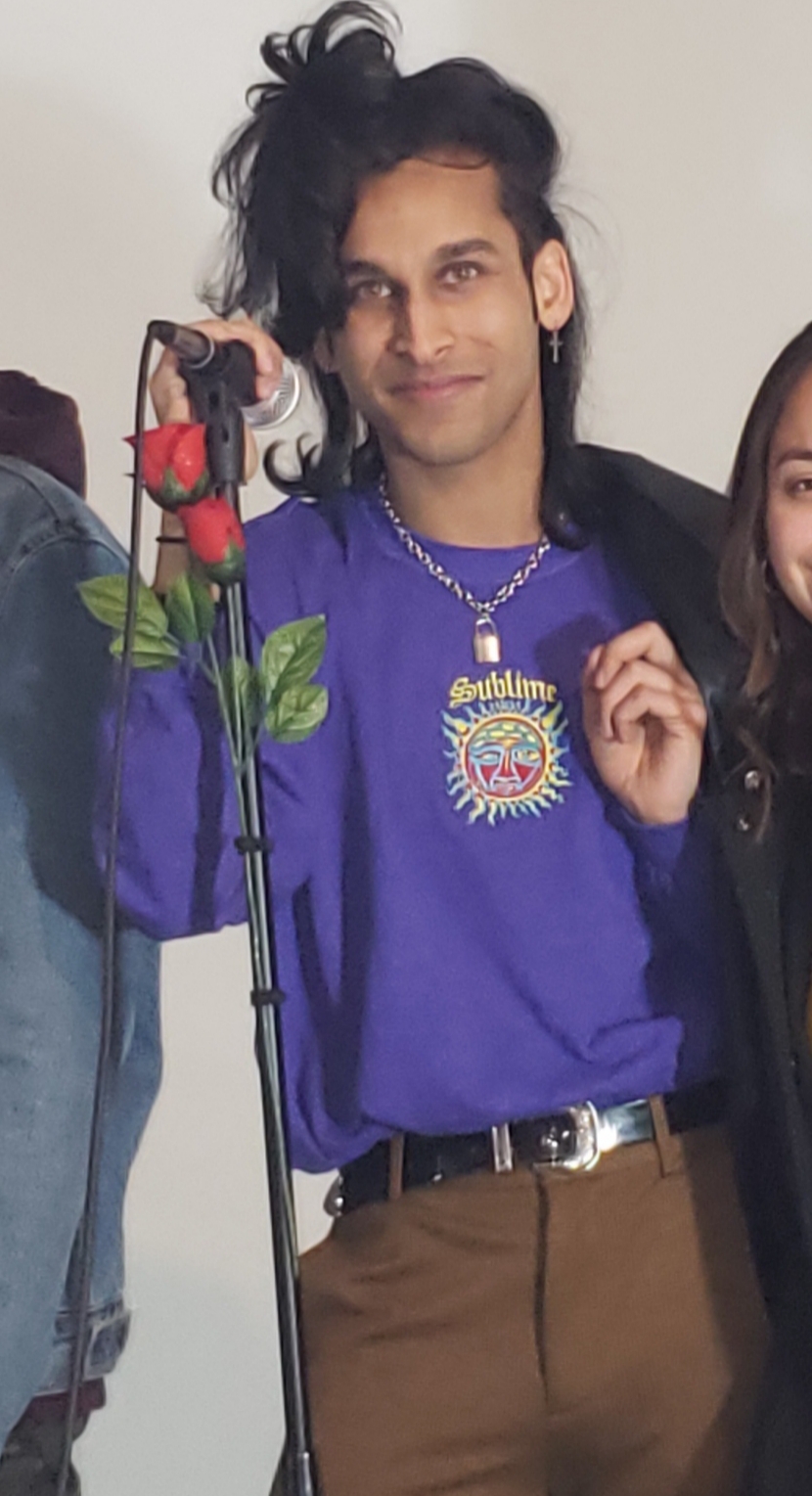
Joshua Sweet is hard to miss. Before I even knew him personally, I was able to recognize him as someone who turns heads instantly, someone who raises questions and charms his peers, and ultimately, someone with a compelling story to tell. With that being said, I was very appreciative when Joshua agreed to be interviewed by me about his music career for Analog. He had a lot to say about his artistry, his upbringing, and ultimately, his goals and aspirations for a bright future in music.

I’m curious how the stage name Joshua Sweet came to be. Unsurprisingly, there is a precise story behind it. “People used to tell me I was too sweet, and that I’m too nice to people,” Joshua says. “I always took that in a very bad way. It always made me feel horrible, like I have to be mean or something. But then I decided to myself, ‘I’m not going to change for anybody. I’ll show the world who’s too sweet.’” 

IMG_8593.jpg
Photo: Terrence Michael Studio

Although he had previously released a record under the name Joshua Johnson, he’s happy he made the switch to a new direction. “I was like, ‘I have to do it.’ Then I came out with my song, ‘Thanks Anyway’ as Joshua Sweet, and then it just took off from there. Joshua Sweet is me.”

As he explained to me, Joshua’s early life was full of turbulence, constant moving, and strict rules put in place by his parents. Growing up in an extremely Christian household with two successful Indian parents, Joshua recalls feeling confused about his identity. “I was never really accepted by the Indian community. They never really liked me, because I was born in America, my name is Joshua, I grew up Christian, my dad’s from England and my mom’s from Malaysia,” Joshua says about his family. “I never really had a community to fall back on, so I really had to find myself and build a sense of belonging.” For a channel of creativity and expression, Joshua remembers the close relationship he maintained with his brothers throughout his childhood. “We didn’t learn from our parents, we learned from each other. Without a doubt.”

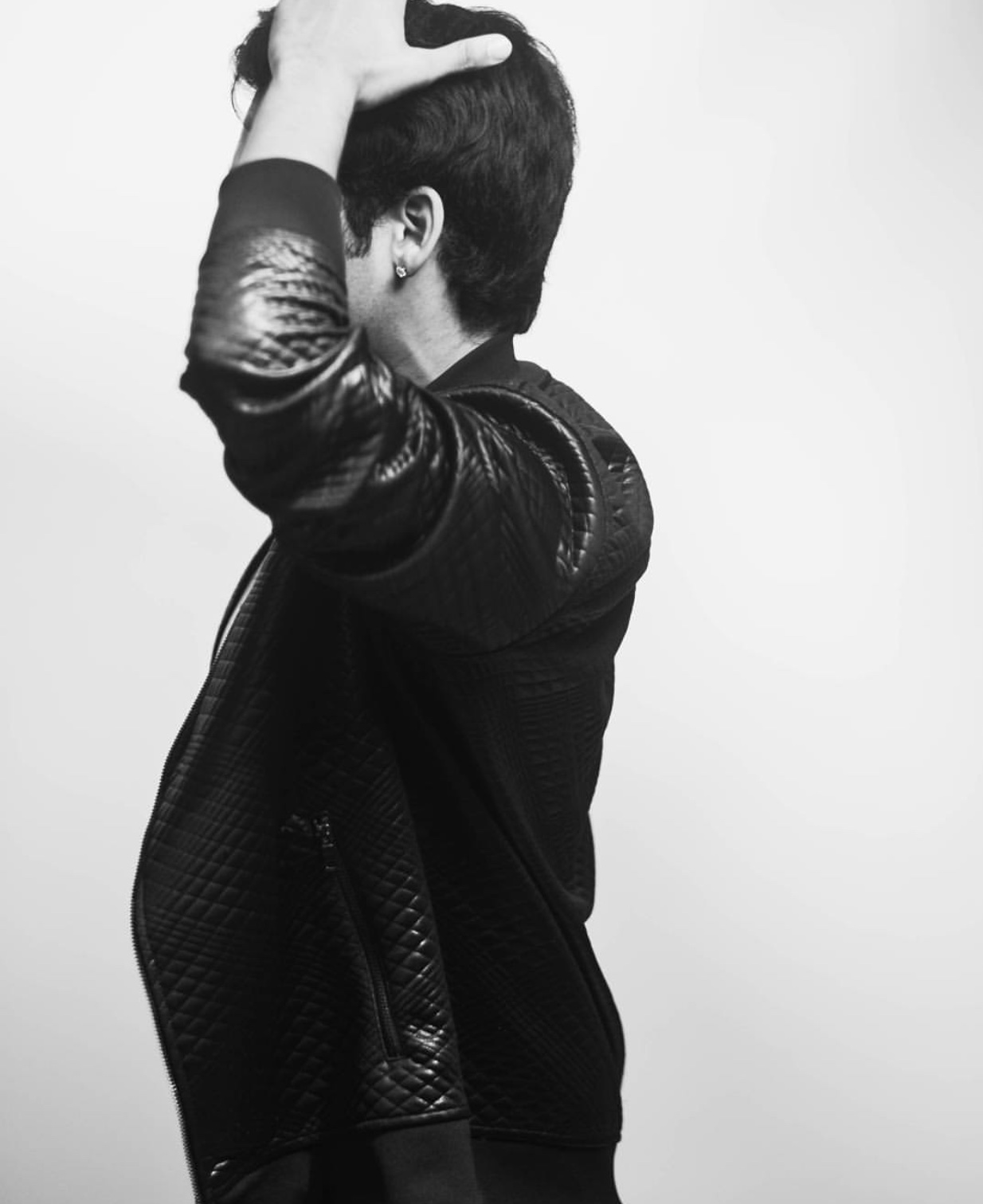
Coming from a postdoc father and a business-oriented mother, Joshua also recalls the strict expectations put in place by his parents, and how that slowly faded over the years. “When you’re moving around so much, it’s hard to keep track of your kids. Eventually they just started loosening up. For example, I was never allowed to have earrings growing up, so [one day] I just kinda did it. But because it was so much later in my life, they were kinda like, ‘Yeah, whatever.’”

This dynamic relationship between masculinity and femininity has always played a substantial role in Joshua’s physical image- one which is reminiscent of the androgynous energy put forth by Prince and Michael Jackson. Unsurprisingly, Joshua often finds himself being compared to many of his favorite artists. He cites Michael Jackson and Prince as some of his most substantial influences, but also includes more modern icons such as Bruno Mars, Shawn Mendes, Justin Bieber, and Harry Styles. Joshua recounts Harry Styles in particular as one of his most favored idols, especially in regards to his femininity. “I started wearing women’s clothes in middle school, and people weren’t ready for that. I was definitely ahead of my time. When Harry Styles started doing that, I felt a sense of belonging and acceptance. One day, I want to tell him how much I appreciate that.”

In late August of 2019, Joshua Sweet released his newest song and music video, “Strangers.” With college starting just a week away, Joshua recalls his reservations about starting that new epoch of his life. In fact, he admits, that period of his life was one of his hardest moments in 2019. “I was about to release my video, ‘Strangers.’ I was just thinking to myself, “I have to get out of here, I can’t go to school. It’s not for me. Part of me still believes that. I was having all these internal conversations with myself, like, ‘I need to release strangers before I go to school and hopefully someone will find it.’’ According to Josh, his other dark moment of 2019 came in December, when popular rap artist Juice Wrld died after a drug-induced seizure. Even though Joshua states he was never a huge fan of the artist, being informed of the death still hit him hard. “It hurt knowing that someone that age could lose it all,” Joshua says in regards to the loss of Juice Wrld. His life basically just started. He was 21, and the life that he was going to be known for and cherished for had just started. He lost it within two years of being a big artist. Two years goes like that; I’ve been making music for longer than two years. That definitely got in my head a little bit. When I see celebrities die, it makes me feel weird, even if I don’t know them. They had this whole life that they probably wanted so badly, and now they can’t have it anymore.”

It’s clear to me, and many of the people around Joshua, that his appreciation and zest for life is enormous. He is someone who approaches every day with a positive attitude, and a general goal to make the best out of all of his experiences, both good and bad.

However, despite these privations, 2019 certainly treated Joshua Sweet well. In fact, he recounts it as an altogether fantastic year for his growth as an artist. He was granted his first interview as an artist in January of 2019- an experience that marked his prominence as “the real deal.” He also discovered a fan cover of one of his songs on YouTube, and then, out of nowhere, discovered he had a fan page on Instagram. When I ask him how it feels to have a designated fan page, he laughs and says, “It definitely felt weird at first, because I didn’t know what was going on, because I’ve never had a fan page going on. So I was a little scared at first, actually. But then when I talked to them, I saw that it was real. I couldn’t believe it. It feels like you just had a child or something. You’re just in shock and you start reflecting on your whole life. I knew it was going to come, but I didn’t know how soon. I try to use my platform for good, because I know people are watching me.”

While many of Joshua’s themes and lyrics are centric around a typical pop, love/breakup dynamic, he also enjoys branching out into other subjects, such as social justice issues. Joshua says he is a firm believer that our generation will change the world for the better, and ultimately, undo the harm caused by prior generations. Joshua says, “I know we’re going to change everything, and the way society was built by prior generations. They have a lot of wrong beliefs, in racism, sexism, and the people “below them.” This year, Joshua hopes to release his song and music video for “Fear the Youth,” which covers this exact topic. 

IMG_8580.JPG

Passion for helping others and even exploring philanthropy is one of Joshua’s biggest goals once he becomes a prominent artist. As of right now, Joshua is growing out his hair for the sole purpose of donating it (and yes, although I’m sad by the prospect that he’s going to cut it, I understand his mission). He says that while he certainly wants to live well, money and cars aren’t as important to him as pure, wholesome happiness. At the root of everything, Joshua Sweet just wants to spread his sweetness. “I strongly believe that we should be kind to one another, regardless of our differences,” Joshua says about his values. “That’s definitely a huge value of mine, to treat people equally and respectfully regardless of if you’re gay, straight, trans, black, white- we’re all human. I feel like we lose sight of that sometimes.”

Along his journey of pursuing music professionally, Joshua says he has certainly learned a lot about success, connections, and community. Additionally, even though he was originally apprehensive about entering college, Joshua appreciates the lessons he has learned along the way and the friends he has gained. On campus alone, Joshua is aware of his success and knows that people will approach him solely because he is an artist. However, he has no reservations about the somewhat surface-level attention he receives. “I guess I kind of knew that would happen, so that’s why I don’t even hate it. I was signing up for this life and what comes with it. And I am fully ready for it.”

Beyond adoring college acquaintances, Joshua is also grateful for the support and interest his friends have shown in his lifestyle. He says that his friends accompany him almost anywhere- from the studio to record new music to photo shoots, they’re always close by to offer their loyalty. Having a large network has also initiated Joshua to extend his recognition. “People who I don’t know will come up to me and tell me that they like my music, and it’s the greatest feeling in the world. When you show your music to one person, they’ll show it to another, and another, and another. That’s how a lot of people find me. People will show their parents my music, and then their parents will be impressed with me. It’s just the greatest feeling ever.”

Although Joshua does record all of his music at a studio, he prefers to write whenever and wherever inspiration hits. “I don’t write in the studio because that’s actually very financially irresponsible, because you’re paying for that time,” he says about the expensive nature of studio time. “I write wherever inspiration hits me, really. It could be in my dorm room, in my room at home, or even in class, it will hit me sometimes. I have this song called ‘Broken Girl’ that nobody’s ever heard before, but it hit me in the middle of class. The lyrics just randomly came into my head, and I just started writing in the middle of the lecture.”

As of right now, Joshua says he has put writing on hold so he can focus solely on recording. “I want to release my song ‘Lucy’s Jewelry’ and release my video for ‘Fear the Youth,’” he says in regards to his plans for 2020. Additionally, in an ideal world, Joshua hopes that 2020 may be the year his music career takes off drastically. “My aspiration for 2020 would be to randomly become one of the biggest artists ever. In the real world, though, my goal is just to work my hardest and be happy. I know that hard work is what’s going to get me there. I’m optimistic in the sense that I know I’ll get there.”

Even if Joshua ever changes his mind about pursuing music (which is, from what I can tell, extremely unlikely), he has a backup plan for his career. “I would be an actor,” he says about himself if he had to pick a different career. “I am an actor already, but definitely not as serious as music. I’m aiming for music, and then I can branch off into acting. I feel like acting and music go hand in hand. When I think about having a career, I can’t imagine myself at a 9-5 desk job.” (Neither can we, frankly.)

Before we end the interview, I still have a couple more questions for Joshua. I ask him what he wishes more people knew about him, and he says, “No matter who someone is or what they’re going through, or how you perceive themselves, they’re always welcome to talk to me, and I will always accept them no matter what they feel they’re different for. They don’t need to feel uncomfortable or anything. When they’re with me, they’re cared about a lot.”

Speaking to Joshua face-to-face for this story, I am able to experience firsthand his warm, kind-hearted nature towards himself and others. While he certainly funnels a lot of thought and attention into himself, a large part of his identity is still essential around how he can leave a positive mark on others. 

Lastly, before we close, Joshua has a final piece of advice for other budding young artists hoping to achieve success. “Just because someone tells you that your idea is bad, doesn’t mean it actually is bad. They’ve never seen the outcome, and they don’t know what’s what. If your peers had all the answers in life, they would be further than they are now. No matter what, your ideas are just as good or even better than what their’s ever could be.” ★ 

Joshua, we wish you success and luck with everything!

A Warrior with Words: Tiana Ferrell

“Being different isn’t a personal attack, it has no reflection on you. Different is just different: the way we look, the way we love, where we come from. That was Dr. King’s dream, to have us accept our differences as well as our commonalities.”

Perhaps as one of the most influential civil rights activists and journalists of the late nineteenth/early twentieth century, Ida B. Wells is undeniably underrated. Being born into slavery and losing her family to the yellow fever epidemic in 1878, Ida certainly had several personal battles waged against her. However, this powerful woman went on to co-own the Memphis Free Speech and Headlight newspaper, document cases of lynching throughout the country, and even become a founding member of the NAACP. Later in her turbulent life, she married and had a family, while still continuing her journalistic work and her fight for freedom. 

For this feature, I had the honor and privilege of speaking to Tiana Ferell, the great-great granddaughter of Ida B. Wells-Barnett. Ferell, a prosperous writer and producer based in the Atlanta area, had plenty to say about her craft, her passions, and of course, her incredible ancestor.

IMG_5200.JPG

Analog Magazine: Tell us a little bit about your titles and roles, and what your day-to-day life entails.

Tiana Ferrell: I have so many! I run Tiana Ferrell productions, so we produce stage plays, we write content, and we do a lot of project management. That’s the bread and butter. On a day-to-day basis, I am writing, interviewing, and bringing projects to execution, if it’s a stage play or a screenplay. I also, of course, continue the family legacy of Miss Ida B. Wells-Barnett. Sometimes that includes partnerships with our Ida B. Wells Memorial Foundation, or The Ida B. Wells-Barnett Museum in Mississippi. There’s always different projects going on. With continuing the legacy through my production company, I wrote and produced a stage play on the life of Ida B. Wells. It’s not her entire life, but the beginning stages. She was such a well-rounded person, and I wanted to share an unsung story because Ida is still new to history. We didn’t know about her until the 1970s when her daughter, Alfreda, published her autobiography. There’s still a lot of things we don’t know about Ida B. Wells. I wanted to share what ignited that fire in her, and the Ohio Railroad in Memphis through the ladies’ car incident. A lot of people don’t know about that story, and it’s one of those things that was swept under the rug, because we didn’t want to accept (we as in America), that African-Americans have rights. She won her case in court in Memphis, and we wanted everybody to know that. That was something kept secret that I wanted to bring to the forefront. 

AM: Where were you born and raised, and how did your upbringing affect your future goals?

TF: I was actually born in California. I moved to Atlanta when I was around six, and I moved around a couple places, like Memphis and Holly Springs, Mississippi at one point. However, I always came back to Atlanta and Atlanta is my home. My upbringing prepared me for the challenges that I would face. It made me stronger, knowing that I looked differently than some of my neighbors, and that once I got a certain age, I would be perceived as such. I was so naive growing up; I was the only black child in the school. But I thought that I was like everybody else, and when my family explained to me who Ida B. Wells was, I wasn’t impressed as a child. I just thought she was a dead relative, right? One day, when I became a teenager, I was in the store with my friends and someone looked at me like I was stealing, and I thought, “Wow, I am different. This is what they were trying to prepare me for.” I read Ida’s biography when I was a teenager, and at that moment, it kind of clicked. Like, “Wow, this is who we’ve been talking about at the dinner table!” Every time I complained about something minuscule, like “It’s cold outside,” I would think, “Do you think Ida B. Wells would be complaining that it’s cold outside?” So everything just came full-circle and made sense. I was very shy (I still am incredibly shy), and I think my upbringing definitely prepared me for things, because I always, even today, have to say, “Okay, what would Ida do? Why are you shy? Why are you nervous? Why are you uncomfortable?” I’m sure Ida B. Wells’ entire life was uncomfortable, and she made it through the discomfort, and you’re complaining about being shy- how trivial. Although the world still needs some work, I definitely have it easier because of Ida B. Wells.  

AM: What were your parents like?

TF: I am related to Ida B. Wells through my father’s side, and my father’s mother is Ida B. Wells’ granddaughter. My father always reminded me where I came from and why it’s important to give back. He encouraged me to go to Ida’s alma mater, Rust College, because I had no interest in doing that. I wanted to go to all of the well-known schools that everybody else is attracted to. They convinced me to channel Ida, and although I did not graduate from there because they didn’t have the curriculum I was looking for, I felt a connection to her when I was walking the streets and able to visit her parents’ resting place. I was able to feel the souls of my ancestors. I’ve always been reminded by my parents, especially my father, how important it is to continue the legacy. They always reminded me that it’s important because Ida B. Wells wasn’t known until her daughter published her biography. It was up to our family to ensure that the world knows how special she was.

AM: When did you start getting into activism/advocacy/writing?

TF: I would say my early twenties. Like I said, I struggle with my shyness, so it was definitely something I wanted to do when I was a teenager, but I just wasn’t ready to have the spotlight on me. It was definitely my early twenties- when the cause outweighed the shyness. Something needs to be done, something needs to be said, and I can’t keep waiting on someone else to say it. That was the tipping point for me; again, “What would Ida B. Wells do? She wouldn’t wait on the perfect scenario. She wouldn’t wait until tomorrow. Tomorrow’s not promised- we have to do it today. My grandmother encouraged me to do some things as well. She said, “I’m not gonna live forever, it’s time for you to take the torch. You have to be more involved.”

AM: At what age did you realize your great-grandmother, Ida B. Wells, was a critical member of the civil rights movement?

TF: I would say my early teens. To see not only what she did, but to know that she was shut out because she was a woman. Even some of her friends, who respected her, left her out of their autobiographies. It’s just like, “Wow, she’s so ahead of her time.” It’s very impressive. 

AM: How would your family and friends describe you?

TF: Like I said, I am incredibly shy, but if I set my mind to do something, I’m going to see it through and I’m going to do it very well. There’s no half-stepping. They would also describe me as strong-headed and determined. I care about my community, probably more so than I do myself. I definitely want to make the world a better place for those who come after me. I’m also very organized- I am a Type A personality. My closet is color-coded! Lastly, I hope that they would say that I am nice. That’s what I want to be remembered for- just being kind. 

IMG_3850.JPG

AM: Have you ever experienced prejudice or sexism in your own life while striving for your professional goals?

TF: Definitely. Especially in civil rights organizations, a lot of men over-talk you or don’t take you seriously. When I pitched my play, I wasn’t able to get a lot of people on the line because I was a woman. I remember speaking to some of my partners who said, “We have to get a man on our team, because this is just the way it is sometimes.” Sexism is a big one, and racism. I remember I was at an event and I was called a racial slur. I walked past somebody and I heard it, but I just kept going. They didn’t realize that I was coming up to speak. After, that same person wanted to shake my hand and take a picture with me! Because, you know, now I’m different. I’m the token one, right? However, I never even said anything to that person; I just went on about my day. Sometimes I’m baffled and dumbfounded that it’s still going on. I think to myself, “Did that make you feel any better, saying that to me or somebody else? I’m still here, we’re still going on with our day.” 

AM: What type of journalism and digital media are you interested in, and how do you feel that has bettered you as a person?

TF: I kind of transitioned from journalism into storytelling. My goal now is to educate through the arts, because now, in a world where everything is at your fingertips, and our attention spans are so small, a lot of people don’t read anymore. How do I reach them? How I do I educate them? I do it through entertaining them; that’s my goal now, and that’s what I’m working towards. The arts are so important. Before a child can talk, they sing. Before they can write, they draw.

AM: What topics do you enjoy pursuing in your writing?

TF: Definitely activism, and I like to explore historical topics. I also just like to tell true stories, because there are so many things that happen in our lives that we can piece together. Not only is there a story, there’s always a teaching element to it

AM: Can you tell us, in turn, what Ida B Wells’ journalism career meant to you in regards to carrying on her legacy?

TF: I think now I’ve accepted that it’s in my DNA and it is my destiny. For years, I was told that I was a good writer, but I didn’t enjoy it so I sort of ran from it. When I was in high school, my teachers told me that my writing was awesome. When I got to Rust College, where Ida attended, my English professor told us on the first day of class that she doesn’t give out 100s because there’s no such thing as a perfect paper. You miss a comma, you miss a period, or something like that. We had this big paper due, and she gave us a few weeks to do it, but of course I procrastinated and did it the night before. I received a 100 on it, and she said it was impeccable. At that time, I didn’t know what “impeccable” meant, so I went to go look it up and said, “Wow, it means flawless.” And at first, being a teenager, I thought, “Ha ha, I thought you didn’t give 100s!” She pulled me to the side and said, “Tiana, you are phenomenal. I have never given out a 100. There was not one error in your paper.” But again, I kind of blew it off. I can’t remember the day I accepted that I had a gift as a writer. That wasn’t me trying to chase Ida, but I learned that you can’t outrun destiny. I should have been writing since college, but I took a detour. 

IMG_8570.JPG

AM: What modern pressings issues do you see in American society that deserve more attention and activism?

TF: Definitely equal rights for women. That’s something we hear brought up frequently because it’s still going on. You’d think that we wouldn’t be talking about this anymore, but when it comes to fair wage and feeling safe, not getting catcalled or sexually harassed, and things of that nature, we still have work to do. I also think that LGBTQ rights definitely needs more attention. I think we definitely need more education on love; it just goes back to that old saying that we’re afraid of what we don’t know and what we don’t understand. It makes us act foolish at times because we think being different is “bad.” Being different isn’t a personal attack, it has no reflection on you. Different is just different: the way we look, the way we love, where we come from. That was Dr. King’s dream, to have us accept our differences as well as our commonalities. I think that’s something that needs to be reminded to us- that all of our issues may not seem that big. I moved to Holly Springs a few years ago to try to go back to work and help my community. I wasn’t embraced by everybody there- just because I’m from a big city, I’m different. A lot of people weren’t okay with that. 

AM: What is the greatest lesson you’ve learned so far in life?

TF: It’s nice to be important, but it’s more important to be nice. And storms don’t last forever. 

IMG_0375.JPG

AM: What are your aspirations for the future?
TF: I am working on a couple of movie scripts right now, so hopefully I can have those done by the end of the year. And again, I just want to share with the world about Ida, whether that’s through the stage play or another medium. 

AM: What advice do you have for other young writers, PR professionals, and college students interested in going down a similar path?

TF: Get as much exposure as you can, whether it’s an internship or from your professor. I was the girl who sat after class for as long as my professor would allow me to. I fell in love with PR during an internship for my masters program, because again, I was a good writer. Just because I did that internship, I realized PR was something I was good at. If you’re doing a press release, make sure you get to the point as quickly as possible. When you’re emailing it out, you have to make sure you come up with a good subject line as well. When it comes to gaining exposure for your clients, you have to make connections. A lot of people call themselves PR professionals, but they don’t have a contact at the local radio station. You have to have those connections so you can call someone and say “Hey, Tiana, I really need you to cover this,” because your clients expect you to have some sort of coverage. When it comes to other areas, rather than just saying “network,” I would say use your network. That was something I had to discover. I was like, “Wow, I know a lot of people, but I’m afraid to ask for certain things. Use your network and say ‘Hey, do you have a couple of minutes?’ Or, ‘Do you happen to have the phone number of this person?’. Use your network! When it comes to writing, or whatever your craft is, just hone in on it. There’s no getting around it; you have to practice and you have to educate yourself. Now, I’m constantly taking different writing classes. When I decided that I wanted to write a play, I took a playwriting class at MIT. You always have to continue your education; that’s very important. Any professional organization, such as attorneys, need their education credits every year. It’s no different for writers or anybody else. Continue your education so you can stay on the forefront. What you put into it, you’re going to get out of it. If I could tell my younger self anything, it would be to be patient. We want everything to happen yesterday. Now, I see that everything that did happen was moving me in the direction that I was supposed to go. We sometimes get down on ourselves, but the universe is moving us in the direction that we are supposed to take. ★

How my dating life changed after being in a same-sex relationship

I grew up as most young humans with vaginas do: being dressed up in pretty dresses for special occasions, being given dolls to play with, every item ever gifted to me being pink or purple (which was ultimately fine because I love purple). Along with the general aforementioned material items I was being taught to like, little by little I was being socialized to love men and present myself in a way that is most “desirable” to them. For years and years, I grew up hearing “Men don’t like it when you-”, or “No man wants a woman who-”.

Now, as a 22 year old human who is neither a woman, nor straight, I laugh at these convictions. I was raised to be a strong, independent human, which my parents instilled in me while also placing a certain importance on “becoming a woman”. I grew up hearing that it was “unladylike” to sit that way, not shave my legs, or wear or be interested in certain things. It was always a mystery to me as to why a family who believed in not letting anything hold you back in being yourself and accomplishing what you want definitely fell prey to some of the generalizations of what people who are different sexes “should be”. 

One answer I reached as an adult: it’s the way that people, especially women, in this society are socialized. I grew up in the early 2000s, and even in the 21st century I was being told by the world that my worth was dependent upon my possible desire to men. This specifically came through in the realm of appearance. I have always been in the mindset that “dumbing yourself down” so men would like you was just that – dumb. I never went along with that portion of the beliefs. My parents had taught me to be smart and to hold my own. However, I went through the vast majority of my life thinking this way: keeping my hair long, keeping my face made-up, dressing more femininely than I necessarily wanted to. Now, reflecting on this, why did I think that being who you were inside was more important than showing who you are on the outside?

When I was 15, I realized I was not straight. I came out as bisexual when I was 17, and I’ve eventually settled into the comfy hammock of the term “pansexual”. Gender genuinely has no bearing on my ability to find someone attractive or to fall in love with them. I had a boyfriend during my junior year of high school, someone who never made me feel uncomfortable with my body, appearance or sexuality. I knew I was attracted to all genders, but my mindset was still stuck with this tape on loop that I needed to be “presentable” and “desirable” to men, so they would want to date or hook up with me.

When I was in my sophomore year of college, I got into my first relationship with (someone who at the time presented as) a woman. I was in a queer, same-sex relationship for the first time in my life. I learned so many things about love, myself, relationships, mental health, etc. However, some of the biggest self-learning I did was post this almost 2 year long relationship. Newly single, 20, in New York City and at the time still not caring to question my gender, I was ready to get back into the dating scene after some recoup from an LTR.

Something about my mindset had definitely changed though. I had grown to love a side of myself that reared its head while in my relationship, in conjunction with my freedom at an art school to express myself however I pleased. I had outwardly embraced an aesthetic that felt the most like me, leaning into a limited color palette of black and darker jewel tones. I embraced my desire to change the hair everyone knew me for for the majority of my life and dyed it purple like I had been dyeing (pun intended) to do for years. A year later I shaved myself a side shave, because I always loved my long hair but wasn’t willing to commit at the time to a full shave just yet. I wore solely Doc Martens and boiled down my makeup routine to a simple cat eye and mascara, expressing myself with bolder eyeshadow or lipsticks when I had the time or the gaul. I inked my body with a couple tattoos and punctured it lovingly with a few more pieces of metal in my ears and nose. It was really the first time I looked at myself and saw MJ. I liked the way I looked before, and don’t hate that person by any means, but being this version of myself was and still is the most me I’ve ever felt.

I found myself feeling very comfortable embracing me instead of a gendered body. I didn’t feel the need to, and still don’t, put a label on my gender; I just feel like me. I loved dressing decently androgynously, changing like a clothing cameleon day to day. Some days I loved a black dress, patterned tights, and heels; others I preferred jeans, a flannel, and big hoops. It stopped mattering to me what was “feminine” and more what was “MJ”. I didn’t do, or wear, things because they were and or weren’t “what a girl should be”. I like to shave my body hair because I like the way it feels when I get in my clean sheets, not because it’s feminine. I wear winged eyeliner everyday because it makes me feel confident, not because I “should”. I learned (after shaving my head) that I love my long hair (with my side shave) because it makes me feel like me, not because “girls should have long hair”. I dressed however I wanted, because I felt like a badass, not because I wanted to please someone.

I reentered the dating scene with this newfound, subconscious (at the time) thought process of “So what if cis-men don’t find me attractive? I have like 7,000 other genders to pick from.” It’s been 2 years since then, and trust me, I’ve learned even more since then. I’ve had my fair millennial share of the dating scene, and I have something to report: Men don’t give a FUCK. I’m pansexual, with a stronger lean to women/gender-nonconforming folks, and I can say that half of my dates since have been cis-men. I have been the blonde, blue eyed, peppy gal. I have been the half-shaved-head brooding art school student. I have been the bald, overconfident “no long-termer.” I am currently the bobbed hair curvy GNC person I am today. I have not had as many male suitors as the stereotypical “pretty” as I have had at any other stage. You know what drew in most of the people I’ve been with? Not shaved legs, not long blonde hair, nothing of the sort.

Confidence. The second I learned to own and work what I had and who I was, things got much easier, for me, and for the dating life. On that same vein though, yeah, I had that self-discovery, but the point I’m trying to make- Men. Do. Not. Care. I have had hairy legs the whole time I was with a guy and he didn’t notice until I brought it up. I literally shaved my entire head while I was seeing a man and I walked into our next date and he said “Wow. Dramatic, looks great,” and proceeded to pursue me for the next year. 

What I learned namely from my same-sex relationship was that someone can and should love you for who you are if they truly love you. I was exactly the strong-headed, artsy, sardonic person I am, who also happened to shave their legs. My partner didn’t. I loved them just the same. I wore makeup everyday, they wore it for special occasions. I could talk about art, being queer, loving music, depression, baby goats and everything inbetween and they never judged. I felt entirely comfortable to be who I was. Did that have to do with it being a woman I was in a relationship with? I will say yes, but let me explain.

I think not having the preconceived internalized societal expectations of what a relationship should be really freed our relationship to grow and blossom in a way I don’t know that it would’ve if we were so caught up in what we were “supposed” to be doing. There was no expectation of who was supposed to ask who on a date, who was supposed to pay, who was supposed to cook and clean, or be the “pants wearer.” With a relationship that felt more like two chopsticks instead of a fork and spoon, we supported each other in completing what sides of the relationship we individually felt like executing, instead of trying to perform our separate different functions. It never felt like a requirement to fill out some role, it felt like doing whatever we naturally would’ve as people if gender norms were not at play, which they weren’t.

Being a very strong-willed and impatient person, I’ve been the pursuer of dates or relationships the vast  majority of the time. This used to be a huge internal struggle, specifically in high school, because I thought no one ever found me interesting or attractive enough to make the first move on me. What further frustrated me was that because no one was drooling over me like the movies said boys would, was that 1. I “couldn’t” make the first move with boys because it was “unladylike” 2. I believed I was undesirable as a person. Obviously if no boys are making the first move, I’m not special enough to love, right?

Wrong. Being able to drop the social norms of having to “let the man ask you out” and embracing my confident first-move making gene when pursing women or GNC cuties translated to my relationships with cis-men. After being in a long-term relationship with a woman, when I reentered the dating pool I entirely forgot that dating men was “supposed” to be approached differently. I realized this a couple months in, only to realize my bold tactics were not met with anger, but appreciation and attraction. On more than multiple occasions, regardless of gender or orientation, people have told me they admire my forwardness. When I’m out on a date with someone, the person who picks up the check is honestly whoever is closer to it or who is more insistent. Sometimes that’s me, other times it’s not, and most of the time we split it. 

Being able to exist in a world where I view all potential dating situations as more or less equal is incredibly freeing. I don’t feel the need to adhere to ideals set thousands of years ago by a society that no longer needs them. I know not everyone will or wants to experience being in a same-sex relationship. However, I implore you to take a walk around your mind and think about what you do in terms of your dating style and appearance based on your preference vs what you believe is expected of you. You may just find that upon taking another look at your preconceived thoughts that they are just that- preconceived.